Showing posts with label rhyme. Show all posts

Sunday, September 30, 2018

Twirl and Swirl--Adding Rhythm to Prose


My goal in adding rhythm to prose is to dance words across the page. Another name for this is voice. I never reach my goal on the first draft, and often not by the tenth. Little by little, as I revise the manuscript, the words begin to swing and sway, rollick and roll. Picture book text relies on a rhythm, whether it’s prose or rhyme.
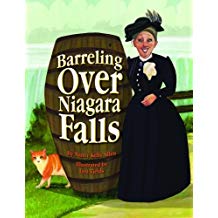
Think of rhythm in terms of music. Listening to the upbeat sound of the Rolling Stones makes me shimmy and shake. An Elton John ballad brings on the swing and sway. The beat. The cadence. The rhythm. They affect us in the same way as we read. Short phrases speed up the action as in this scene in BARRELING OVER NIAGARA FALLS: Annie jostled inside the small, dark barrel, bobbing through the rapids, slamming into rocks. The barrel pitched and rolled—forward and back, left and right, up and down—in the rough, tough bucking-bronco ride. The sentences are long but the phrasing is short with emphasis is on the short phrase.       
Longer sentences, without short phrases, slow the action. I used this method as the beginning scene in HIRAM’S GIFT: Many winters ago Hiram walked to school from deep in a holler, snuggled tight between two mountains. A lemon pie moon dangled like a giant’s lantern and lit the path. 

When you read picture books, notice the rhythm of the words. When you find a passage that you particularly like, read it aloud. Does it swing and sway? Boogie and scoot? Tap and snap?

Call for Submissions for Young Writers:

Amazing Kids! Magazine. Our award-winning, kid-created monthly online magazine is dedicated to providing kids with a fun and educational experience, a place to share their creative works, through their writing, art, and photography. Our Amazing Kids! of the Month stories feature real life kids doing some pretty amazing things! Amazing Kids! believes by reading about other kids' accomplishments, or reading their creative works, it can help inspire more kids to explore their own amazing gifts and use them to make a difference in the world.

Submission guidelines at http://amazing-kids.org/

Call for Submissions for Adult Writers:

U.S. Kids Magazines (Humpty Dumpty and Jack and Jill), providing fun, entertaining reading material is our priority. We accept humorous, playful, and witty stories that kids would love to read—not stories that grownups think kids should read.

As part of the Children’s Better Health Institute, we are always in need of high-quality stories, articles, and activities with a broad health and fitness focus. Please keep in mind that we would rather show kids living a healthy lifestyle than dictate a healthy lifestyle to our readers. In other words, health topics should be incorporated into the story or article, not be the focus of it.

Submission guidelines at http://www.uskidsmags.com/writers-guidelines/

Nancy Kelly Allen has written 48 children’s books and a cookbook, SPIRIT OF KENTUCKY: BOURBON COOKBOOK.

Leave a message or check out my blog at www.nancykellyallen.com

Sunday, July 30, 2017

Writing in Rhyme

In a writing group I recently attended, one member followed up with an email to ask why editors did not like rhyming stories. I certainly can’t answer for editors, and since I don’t (and can’t) write in rhyme, my reply is based on the information I’ve heard in workshops and discussions with several editors.

Rhyme does not work when the rhyme is the most important factor. The story reigns supreme and should have an arc with a beginning, middle, and ending, as with non-rhyming stories. The words should read well and be fun to say, and the rhyming words should be exact rhymes. Near-rhymes don’t cut it.

The strength of the story comes from the voice, emotion, plot, character, and resolution/change at the end of the story, not from the rhyme. It’s easy to write bad rhyme (I know because the rhyme I’ve written is not contract worthy), and good rhyme is extremely difficult to master.  

Editors often steer away from rhyme since it is difficult to translate into other languages, making the sales market smaller. 

The manuscript must tell a good story. If you can do that and follow the rules of rhyme, give it a try. Many authors do and are successful.

Call for Submissions for Adult Writers:

Chicken Soup. Christmas and Holiday Collection – 2018. Our next holiday collection will not be released until 2018 but we are already collecting stories for it. People love reading about the winter holidays – from Thanksgiving all the way through New Year’s Day. We want to hear about your traditions and how they came to be. We want to hear about your holiday memories and the rituals that create the foundation of your life. We love to hear about the funny things too: the ugly holiday sweaters, the gingerbread house that kept falling down, the re-gifting embarrassments and the fruit cake disasters. Please be sure your stories are “Santa safe” so we don’t spoil the magic for any precocious young readers. The deadline date for story and poem submissions is October 31, 2017.

 Submission guidelines at http://www.chickensoup.com/story-submissions/possible-book-topicsSubmission guidelines at

 Nancy Kelly Allen has written 40+ children’s books and a cookbook, SPIRIT OF KENTUCKY: BOURBON COOKBOOK. Check out her blog at www.nancykellyallen.com

Sunday, December 6, 2015

Let’s Talk Picture Books, Part 5

In earlier blogs, I have mentioned that editors did not often swoon when receiving submissions written in rhyme. Often, writers force the rhyme at the expense of the plot or add unnecessary words to keep the rhyme. Exceptions are always possible so just because it hasn’t been done often doesn’t mean it can’t be done.

Stories about inanimate objects that come to life are difficult to write and difficult to nab a contract, also. Two train stories have become popular: THE LITTLE ENGINE THAT COULD and THOMAS THE TANK ENGINE. THE GIVING TREE is also a classic about an inanimate object, but a book about a window that won’t open or a rock that can’t roll will probably not garner more than a rejection letter. Children want stories in which action impacts plot, where something happens. It is difficult to develop an inanimate object as the main character in a picture book. This works better in videos where sound and motion work together to build the character. THE DAY THE CRAYONS QUIT is also another example that inanimate objects can work, but it doesn’t seem to happen often in the publishing world.
Dolls and toys as the main characters can work. Children relate to these, such as the VELVETEEN RABBIT. Dolls look like people and it’s easy to imagine them become real.
What works best as main characters are children and animals, because a young child relates to both. By attributing human frailties to animals make them seem real. Kids identify with the characters’ weaknesses and mistakes. Many popular picture books showcase imperfect characters that grow and learn. Engaging, humorous stories that inspire and can withstand multiple readings are always searched for by editors and agents. 
Call for Submissions for Young and Adult Writers:
Kiki Magazine is an independent magazine owned and operated by women who care about girls. Kiki uses the college fashion design curriculum to tap into girls' creativity, including business, fine art, craft, history, world culture, math, and even chemistry. The publication accepts submissions of illustrations, artwork, photos, or articles from all ages.
Submission guidelines at submissions@kikimag.com

Sunday, November 15, 2015

Let’s Talk Picture Books, Part 5


Earlier, I mentioned that editors did not often swoon when receiving submissions written in rhyme. I’m still on a roll of what they do not want.

Stories about inanimate objects that come to life are difficult to write and difficult to nab a contract. Two train stories have become popular: THE LITTLE ENGINE THAT COULD and THOMAS THE TANK ENGINE so exceptions are made.
 
THE GIVING TREE is also a wonderful classic about an inanimate object, but a book about a window that won’t open or a rock that can’t roll will probably not garner more than a rejection letter. Children want stories in which action impacts plot, where something happens. It is difficult to develop an inanimate object as the main character in a picture book. This works better in videos where sound and motion work together to build the character. THE DAY THE CRAYONS QUIT is also another example that inanimate objects can work, but it doesn’t seem to happen often in the publishing world.

Dolls and toys as the main characters can work. Children relate to these, such as the VELVETEEN RABBIT. Dolls look like people and it’s easy to imagine them becoming real.
What works best as main characters are children and animals, because a young child relates to both. By attributing human frailties to animals make them seem real. Kids identify with the characters’ weaknesses and mistakes. Many popular picture books showcase imperfect characters that grow and learn. Engaging, humorous stories that inspire and can withstand multiple readings are always searched for by editors and agents. 


Call for Submissions for Young Writers:

Kiki Magazine An independent magazine owned and operated by women who care about girls.Kiki uses the college fashion design curriculum to tap into girls' creativity, including business, fine art, craft, history, world culture, math, and even chemistry. The publication accepts submissions of illustrations, artwork, photos, or articles from all ages.

Submission guidelines at submissions@kikimag.com

Call for Submissions for Adult Writers:

Humpty Dumpty
Magazine (ages 2-6)
FICTION: We accept full manuscripts of 600-800 words. The tone of the stories should be fun and engaging. Stories should hook readers right from the get-go and pull them through the story. Humor is very important! Dialogue should be witty instead of just furthering the plot. The story should convey some kind of positive message. Possible themes could include self-reliance, being kind to others, appreciating other cultures, and so on. There are a million positive messages, so get creative! Kids can see preachy coming from a mile away, though, so please focus on telling a good story over teaching a lesson. The message—if there is one—should come organically from the story and not feel tacked on.

NONFICTION: We accept nonfiction manuscripts of 700 words or less. We are especially interested in features or Q&As with regular kids (or groups of kids) in the Jack and Jill age group who are engaged in unusual, challenging, or interesting activities. No celebrity pieces please.

POETRY: We accept poems of up to 30 lines. Poems should include unique topics that appeal to kids like sports, pets, friendship, seasonal activities, vacations, and school activities.

PUZZLES, ACTIVITIES& GAMES: In general, we prefer to use in-house generated material for this category but on occasion we do receive unique and fun puzzles, games or activities through submissions. Please make sure you are submitting a truly unique activity for our consideration.

Submission guidelines at http://www.uskidsmags.com/writers-guidelines/


Sunday, November 1, 2015

Let’s Talk Picture Books, Part 3

In picture books a compelling story must be told in 32 pages. If you read a few or a lot of these books, the task of writing one seems easy, but don’t let their simplicity deceive you. Picture books can be tricky to write. In a short span, you must to develop a character and situation and write the story in such a way that the reader will embrace it. 

Language and imagery work in unison to create a story. Some books are written in verse. There’s not an ounce of rhyming ability in my DNA so I don’t attempt it. Also, many editors don’t request rhyme because it is so difficult to carry over the entire story. If you are excellent at writing in verse, remember to think story first, verse second.
Many editors do not like stories written in verse because some writers may be tempted to choose a particular word that fits the rhyme rather than promoting the plot. When this happens the story loses momentum, sometimes takes a detour, and the dramatic core is sabotaged for the sake of the rhyme. Stories should unfold organically not forced in order to get two words to rhyme. Many common rhyme schemes have been overused: he/she/be/tree/me. If the child can guess the next word, that may take away the element of surprise and be less engaging for the audience.
When writing or marketing your first picture book, stick to prose. If you’ve written several picture books in prose and decide to write one in verse, experiment with the story. After you’ve written the rhyme version, write another in prose for comparison. Which works better?
Call for Submissions for Young Writers:
Hanging Loose Press welcomes high school submissions. "We feel a special responsibility to those young writers who look to us not only for possible publication but sometimes also for editorial advice, which we are always happy to give when asked. Our work as editors is of course time-consuming, but we feel a strong commitment to give as much time and attention as possible to the work we receive from high school age writers."
Submission guidelines at hangingloosepress.com/submissions.html
Call for Submissions for Adult Writers:
BABBLE. Indicate in the subject line of your email what section of Babble your piece would run: Mom, Pregnancy, Baby, Toddler, Kid, Body + Mind, Work + Money, Home, Relationships, Entertainment, Beauty, Food, or Travel. Pays roughly ten cents/word for articles up to 1,200 words.
Submission guidelines at http://www.babble.com/write-for-babble/

Sunday, October 25, 2015

Let’s Talk Picture Books, Part 2

Show, don’t tell. In picture books, illustrations show the action so the writer needs to use words to convey emotions and reveal the action, rather than describing what is happening. If the illustrations show the action, little description is needed. Example: Jasper is riding a bicycle in the illustration. Description of the bicycle and Jasper can be eliminated from the narrative and dialog.

Action verbs are our friends. These verbs-slither, crawl, jump, throw-focus on the action rather than description. Avoid overuse of adjectives and adverbs because they describe what is happening. The mantra for picture book writers is “Think visually.” Unless we create art for our books, which I don’t, it can be a difficult task for writers to think of the action in terms of pictures as opposed to narrative description and to omit the parts an illustrator will include. Consider moving the plot forward with action via dialog, strong verbs, and character behavior.
Word choice is key to a picture book and, for me, the most fun in writing. I usually just get the bones of the story in place from beginning to end—the hard part. Once I’m over that hurdle, it’s playtime. I love taking a plain, unemotional, flat sentence and turning it on its dull little head, bounce it around, and see what falls into place. Alliteration, rhythm, similes, and metaphors are word play writers use to be creative with language designed for a particular audience. Tickle the words; tease them; poke and prod them. Enjoy the process. If you’re having fun, you’ll more likely to finish the manuscript and write more.
Next week, we’ll talk more picture books.
Call for Submissions for Young Writers:

Figment. An online writing community from HarperCollins Publishing for writers 13 years old and older to share young adult fiction, short stories, and poetry, give and receive feedback, and enter contests.
Submission guidelines at http://dailyfig.figment.com/category/contests/

Call for Submissions for Adult Writers:

Dialogual is a new magazine seeking submissions year-round on dialogue-only prose.
We seek works on all genres, except erotica. Under 300 words. However, we do not take anything that has been accepted before, or that has appeared on blogs or similar sites. In other words, we want fresh material.
Send your snappiest, wittiest, funniest talks.
Or the ones you think will make us wonder, ponder and think about life.
It can be fiction or non-fiction.